
Magret De Canard (Crispy crackling skin)
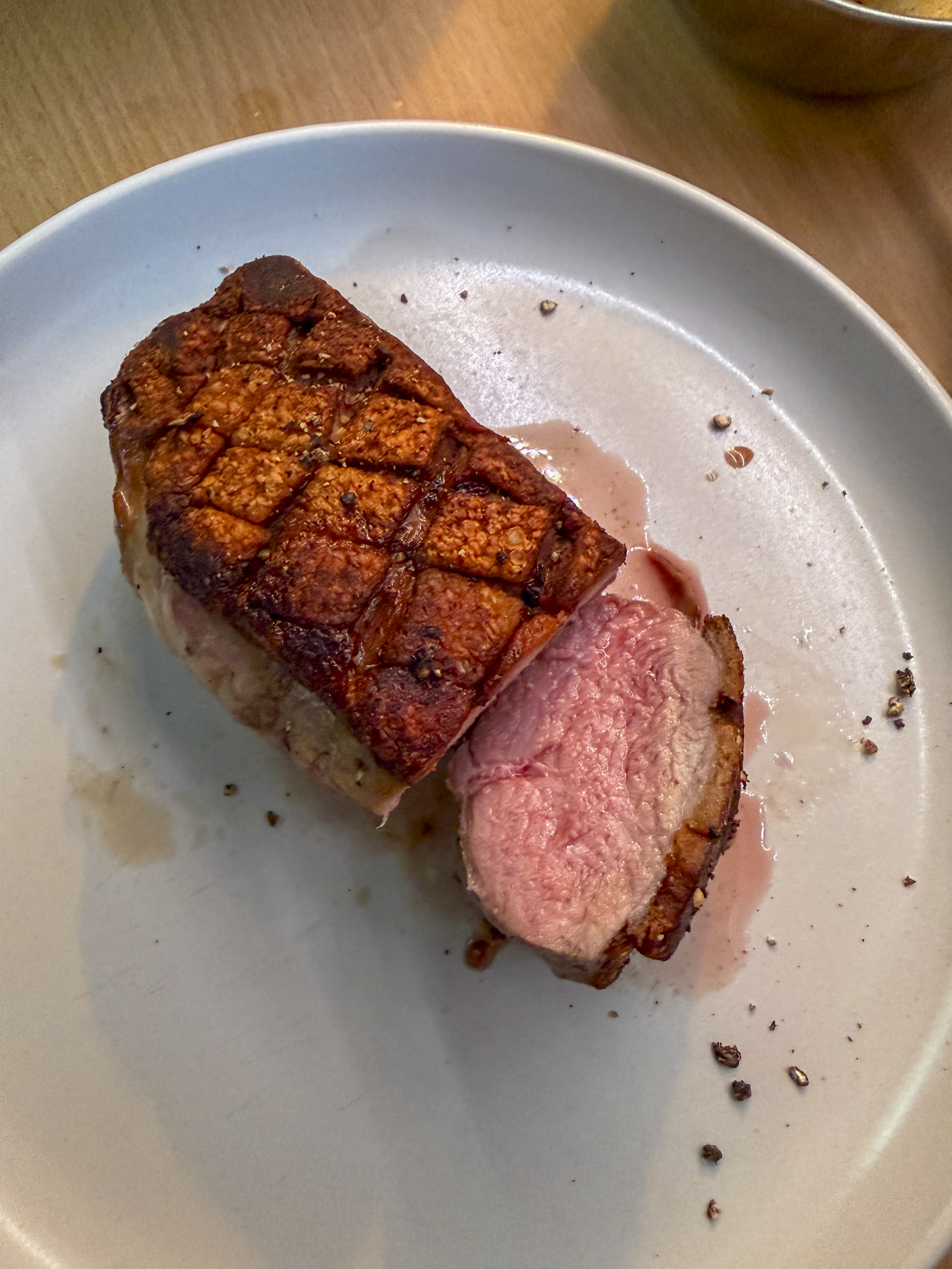
Magret De Canard
Magret De Canard is duck breast of a Moulard duck, the same breed raised for foie gras. It is richer, darker, and more intensely tasting than regular duck breast.
My partner is French, from the southwest of France. He is used to eating magret de canard. He describes his experience as duck cooked with soft skin, even though he thinks the intent might be crispy skin instead.
I had tasted magret de canard a couple of times before. The flavour was there, but the skin was soft. And for me, growing up in Singapore, duck meant crispy skin. My absolute favourite bit was crispy Peking duck skin wrapped in thin crepe, hoisin sauce and spring onions.
I then wondered if only I could make the skin crispy, not Peking duck crispy, but closer to crackling, and to keep the duck meat juicy and medium like a good steak.
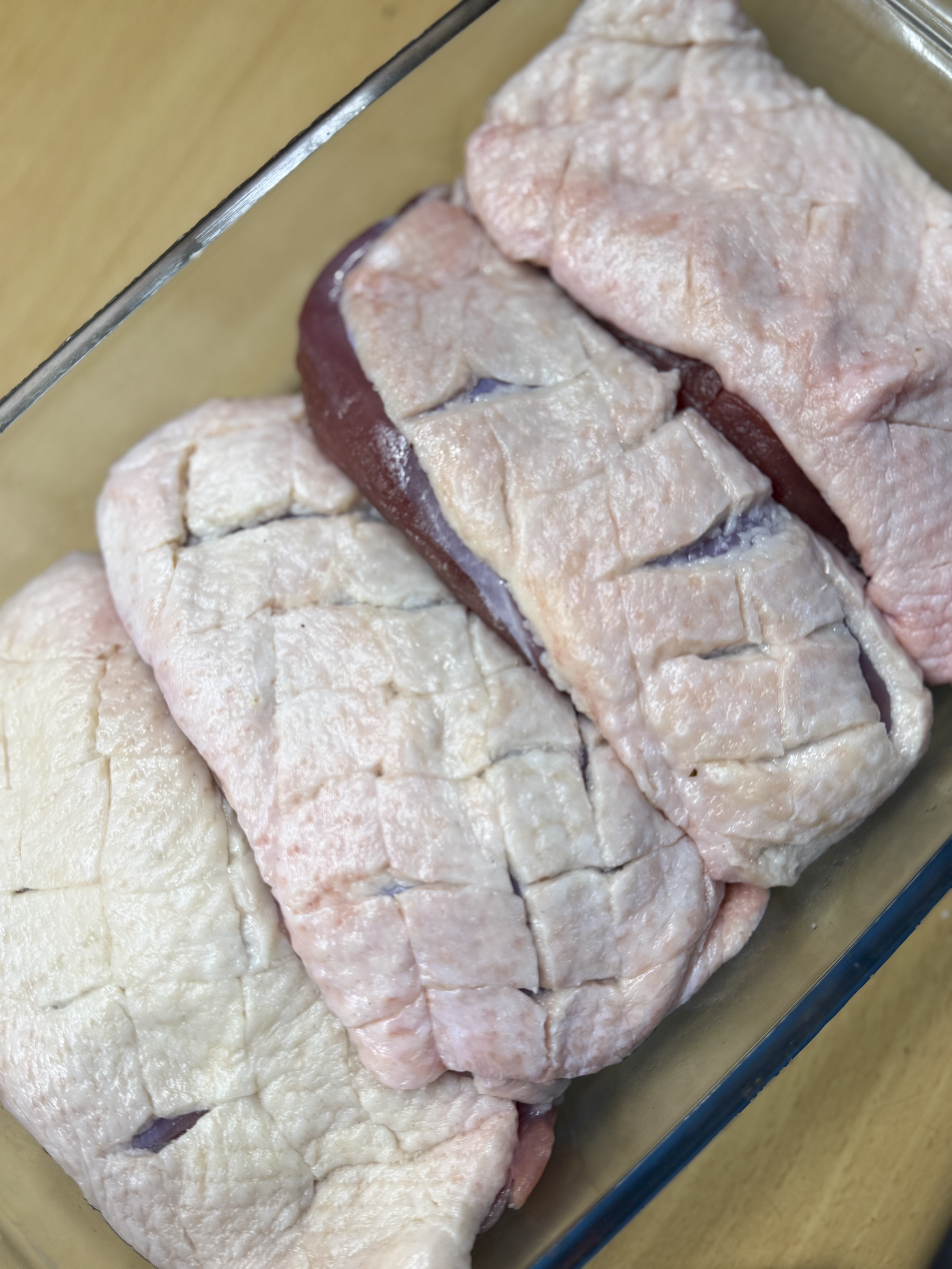
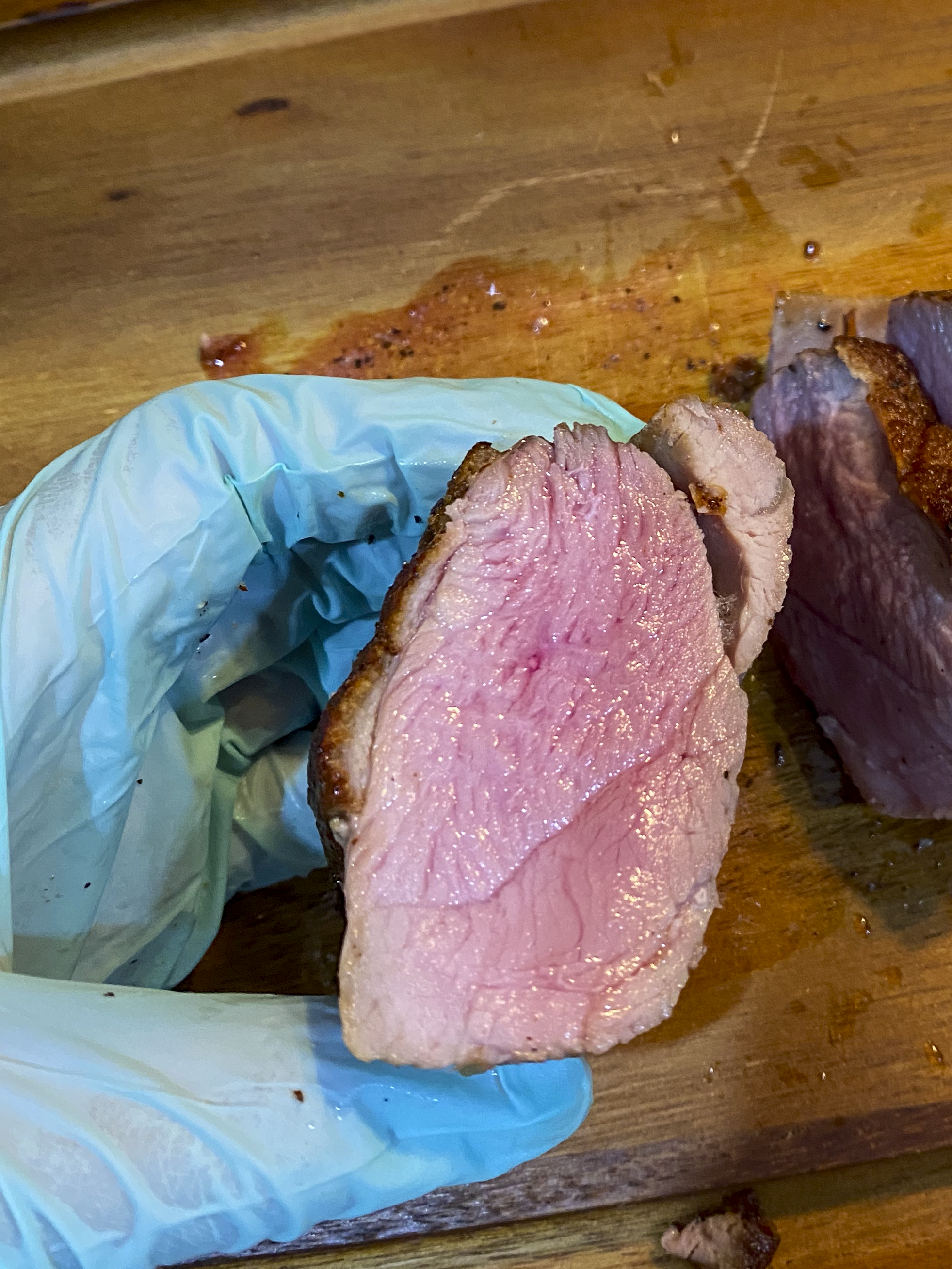
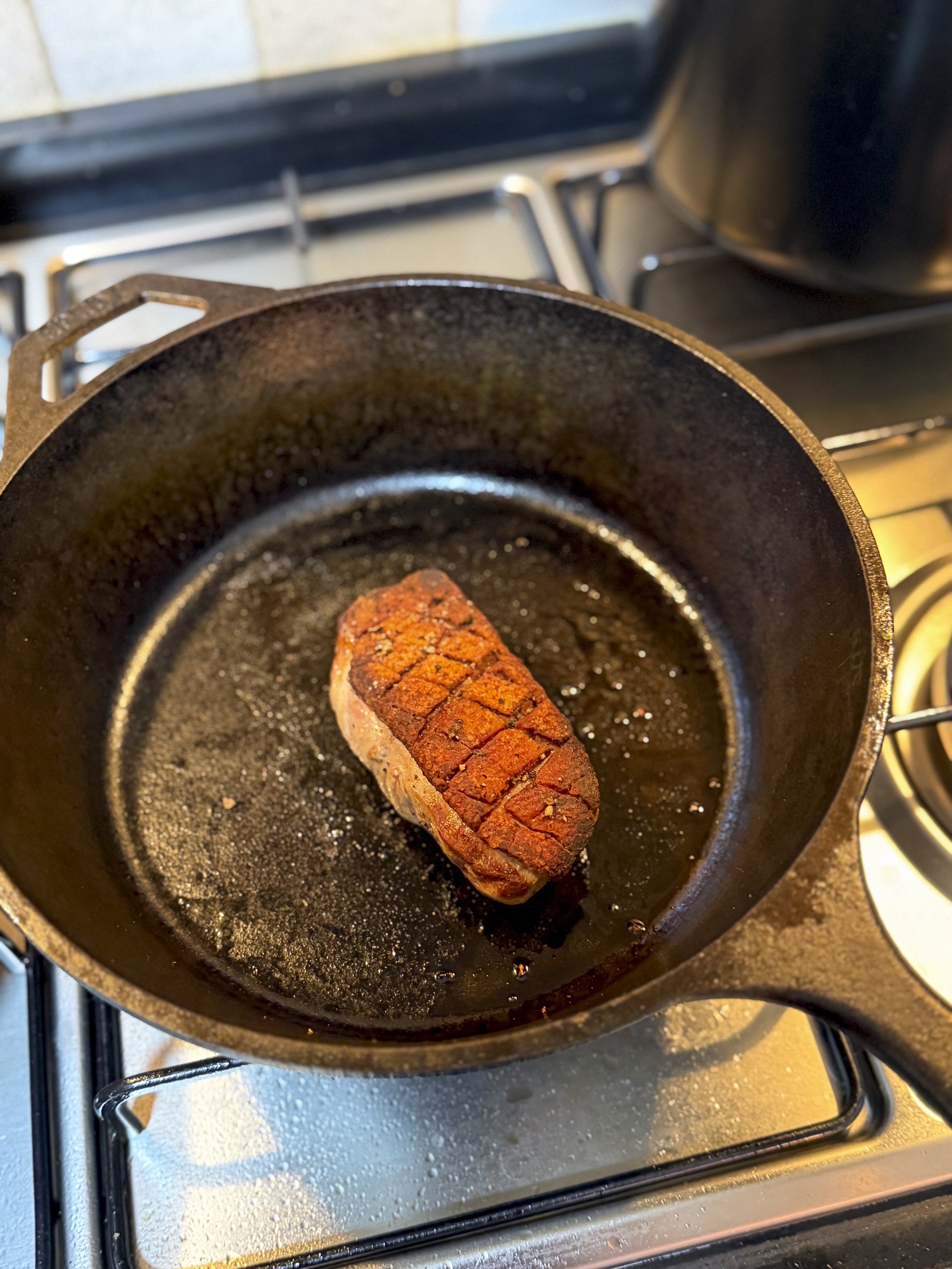
So I experimented, and when my partner tasted it, he said it was the best he had ever had, and the boys enjoy it too. He described it to be: “Exactly the way magret should be cooked. Tender, very crispy skin. This way, it amplifies the flavours. It feels like everything is coming together nicely.” That felt very rewarding.
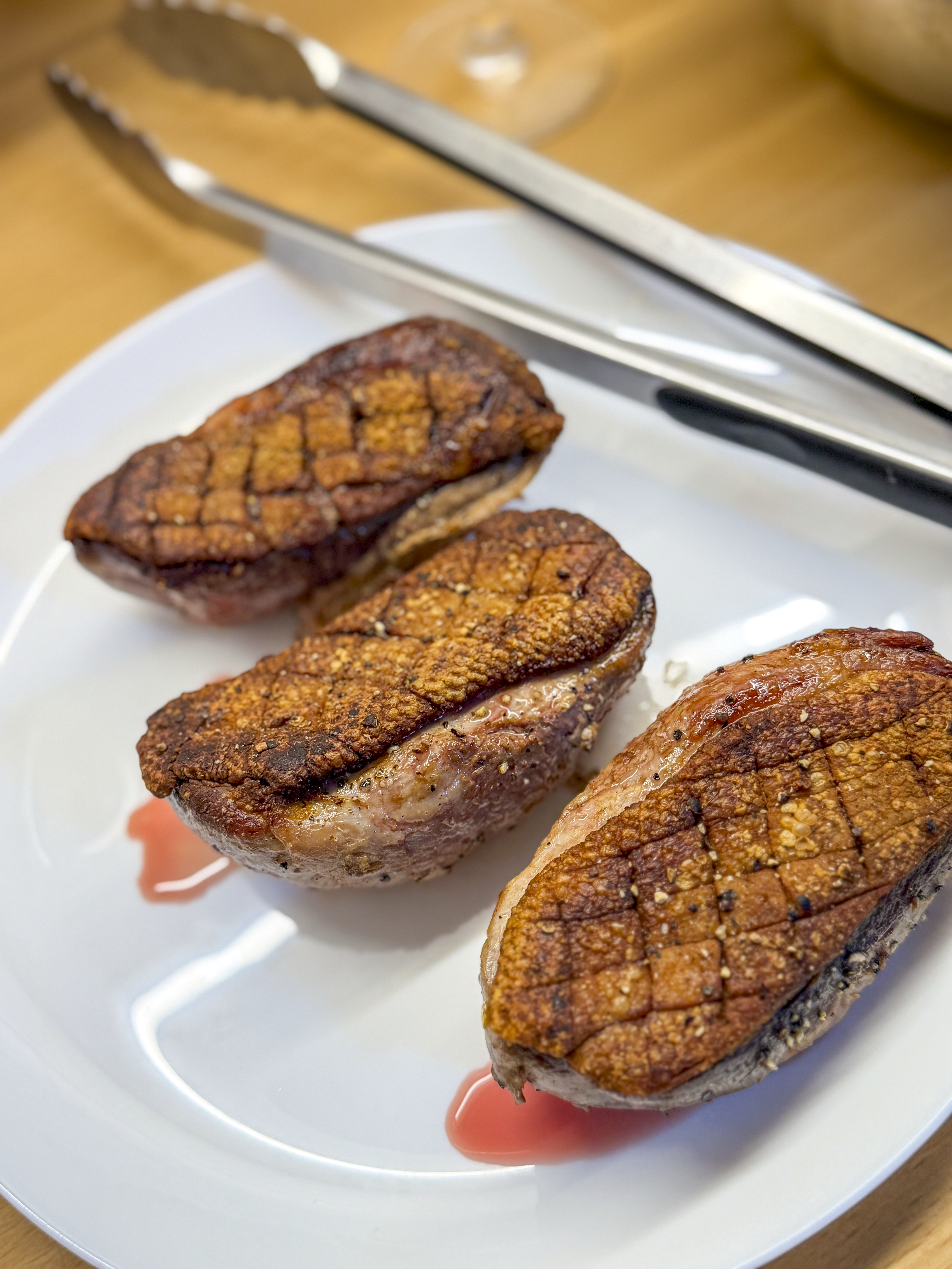
This recipe is low fodmap, dairy-free, and gluten-free.
✔️ refers to a substitute.
Serves 1 as a main.
Prep: 10 min | Cook: 5 min | Total: Approximately 15 min
Ingredients
Main
- 350 g duck breast (per person)
- Salt
- Black pepper
Equipment
- Cast iron pan
- Stainless steel tongs
- Stainless steel bowl — for collecting rendered duck fat
- A plate or bowl — to rest the duck while draining fat from pan
No cast iron pan? See notes for non-stick pan and induction hob.
Method
Prep (24–48 hours ahead)
- If the duck breast is frozen, thaw it completely in the fridge.
- Pat dry the duck breast completely with a kitchen towel on both the skin and flesh sides.
- Generously salt both the skin and flesh sides.
- If preparing more than one duck breast, either cling wrap each individually or place side by side in an airtight container. Store in the fridge for 24–48 hours.
Before you cook
- Preheat oven to 180°C with fan.
Render the fat
- Heat cast iron pan over medium heat.
- Pat dry the duck breast again on both sides.
- Score the skin in a criss-cross pattern, taking care not to cut into the flesh.
- Place duck breast skin side down in the pan. Let the fat render.
- When a pool of fat collects in the pan, use tongs to remove the duck breast and place it on your resting plate. Pour the fat from the pan into the stainless steel bowl.
- Return the duck breast to the pan, skin side down.
- Repeat steps 10 and 11 for about 10 minutes total. You are looking for a deep golden colour and no softness remaining in the centre of the skin.
Finish & rest
- Season the duck breast with black pepper on both sides.
- Place the duck breast — along with the cast iron pan — into the oven and roast for 5 minutes.
- Remove from the oven and rest on a plate for at least 10 minutes.
Serve
- Serve whole or sliced.
Notes
- Duck fat: Let the collected fat cool completely. Store in a freezer bag and freeze for future use — it is wonderful for roasting potatoes.
- Non-stick pan with induction hob: Cook duck breast skin side down for 10–15 minutes, draining fat as it renders. Remove from pan, place on a baking tray and roast in oven at 190°C for 8 minutes. Rest on a plate for at least 10 minutes before serving.
- Cast iron pan handles: Check that your cast iron pan handle is oven-safe before placing the whole pan in the oven.
